Loading...
Serving Lynchburg, VA and surrounding areas. (434) 215-1411
Cracks, bowing walls, and water problems start underground. We build block wall foundations that handle Lynchburg's clay soil, sloped lots, and wet springs from day one.
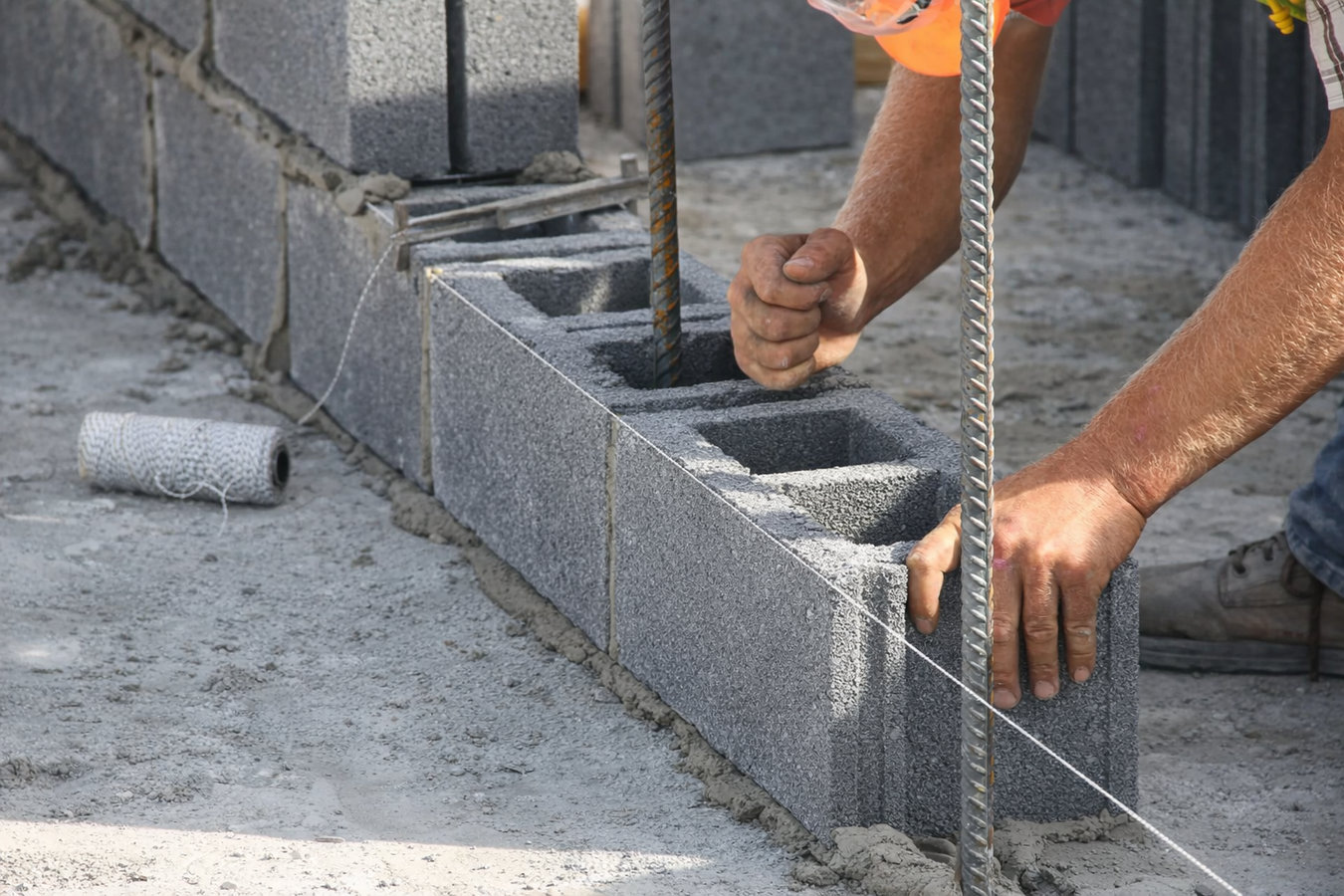
Foundation block wall installation in Lynchburg means building a structural base using hollow concrete blocks stacked in courses, with key sections filled with concrete and steel reinforcement to hold everything together - most jobs run three to seven days depending on the size of the home and site conditions.
A lot of Lynchburg homes - especially in neighborhoods like Rivermont, Daniels Hill, and College Hill - were built between the 1920s and 1960s when poured block was the standard foundation method. Many of those walls are now 60 to 100 years old. If yours is showing cracks, bowing, or persistent moisture, you may be past the point where maintenance alone is enough. Our team also handles foundation repair if your existing wall still has useful life left.
Every new installation starts with a footing poured below the frost line - roughly 12 to 18 inches deep in the Lynchburg area - so winter freeze-thaw cycles do not shift the wall above it. Exterior waterproofing is applied before the soil goes back against the wall, the only way to do it properly without expensive re-excavation later.
A crack running sideways across a basement or crawl space wall - rather than diagonally or vertically - usually means soil outside is pushing against the wall hard enough to start bending it inward. In Lynchburg, this is especially common on sloped lots where clay-heavy soil holds water after a wet spring and presses against the foundation with significant force. This kind of damage gets worse over time, not better.
Stand in your basement or crawl space and look down the length of the wall. If it curves inward at any point rather than running in a straight line, the wall is under stress it was not designed to handle. This type of movement tends to accelerate once it starts, and it is far less expensive to address early than after the wall has shifted significantly.
Run your hand along the joints between blocks. If the mortar feels soft, flakes off easily, or has gaps where it has fallen out entirely, the wall has lost some of its structural integrity. Lynchburg's repeated freeze-thaw cycles through winter are a major cause - moisture gets into the joints, freezes, expands, and slowly breaks the mortar apart over many seasons.
White chalky deposits on a block wall are a sign that water has been moving through the wall and leaving mineral deposits behind as it evaporates. Persistent damp patches or rust-colored stains suggest water is getting in regularly. In Lynchburg's wet springs, moisture intrusion is common in older homes where original waterproofing has degraded over decades.
We handle the full scope of block wall foundation work - from excavating around the existing perimeter and verifying footing depth, to laying blocks in courses with proper reinforcement, applying exterior waterproofing, and grading the soil away from the structure when we leave. For homes that need the old foundation removed first, we coordinate that as part of the project so you are not managing multiple contractors.
For properties where the existing wall has isolated damage rather than widespread failure, we can also assess whether targeted foundation repair is the right call - stabilizing bowing sections, filling voids, and repointing joints - before committing to a full replacement. If your project also involves an outdoor kitchen masonry build or other masonry work on the property, we can often coordinate both under a single project to save you time and disruption.
Suited for homes with walls that have shifted, bowed, or deteriorated past the point of repair - complete removal and rebuild on a new footing.
Suited for additions, detached garages, accessory structures, and new builds requiring a block wall perimeter from the ground up.
Suited for homes converting an open crawl space to an enclosed, block-walled perimeter with proper drainage and waterproofing.
Suited for properties where one section of the foundation has failed while the rest remains structurally sound - targeted reconstruction without full excavation.
Lynchburg sits in USDA Hardiness Zone 7a and typically sees 20 to 40 freeze-thaw cycles each winter - nights below freezing followed by days that warm back up. Every one of those cycles pushes moisture deeper into any crack in a block wall and widens it a little more. Combined with the region's clay-heavy Piedmont soils, which hold water and expand when wet, the pressure on a foundation wall here is considerably higher than on flat, sandy ground. A foundation built without accounting for those local conditions will show it within a few years. We work in Madison Heights and Amherst as well, where the same soil and terrain conditions apply.
Lynchburg's older housing stock adds another layer of complexity. Neighborhoods like Rivermont and College Hill are full of homes built between the 1920s and 1960s, many of which have never had a professional assessment of the foundation since the house was constructed. Block walls from that era were built to the standards of their time - which means no exterior waterproofing membrane, minimal steel reinforcement, and footings that may be shallower than today's code requires. When we assess an older home, we check all of that before giving you a price, so you know what you are actually getting into before work begins. The City of Lynchburg requires a building permit for foundation work, and inspections at key stages mean an independent set of eyes reviews the work before it is covered up - a protection that benefits you as the homeowner.
We reply within one business day. The first conversation covers the age of your home, what you have noticed, and whether any previous work has been done. You do not need all the answers - just describe what you see.
We visit your property to look at the foundation in person - checking the walls, footing, drainage around the base, and any visible damage. After that visit you receive a written estimate covering what work is needed, materials, and total cost.
We handle the required building permit through the City of Lynchburg - typically a few business days to process. We build that window into your schedule from day one so there are no surprises about why work has paused.
The crew excavates, verifies the footing, lays block courses with concrete and steel reinforcement, and passes the city inspection at required stages. Exterior waterproofing is applied before the soil goes back against the wall, then the site is graded and cleaned up.
No commitment required. We assess your foundation in person and give you a clear, itemized number before any work begins.
(434) 215-1411Lynchburg's sloped lots and clay-heavy soil demand more than a standard installation approach. Every footing we pour is sized and positioned for the specific drainage patterns and lateral soil pressure on your lot - not a generic flat-ground spec.
We follow National Concrete Masonry Association guidelines for block coursing, core grouting, and vertical reinforcement - the same standards used for commercial construction. That means walls that hold up under load and through seasonal movement.
We handle every permit through the City of Lynchburg Building and Development Services office and coordinate all required inspections. The Virginia DPOR contractor license requirement means you can verify our credentials before agreeing to anything - look up any licensed Virginia contractor at{' '}dpor.virginia.gov.
Applying a waterproof membrane before the excavated soil goes back against the wall is the only way to protect your foundation from the outside. In Lynchburg, where spring rainfall averages around 42 inches a year, skipping this step means eventual moisture intrusion - and digging everything back up to fix it later costs far more.
Taken together, those practices mean a foundation that handles what Lynchburg actually throws at it - not one that looks fine on inspection day and starts showing problems two winters later. We are here to give you a realistic picture of your project before any work begins, and to stand behind the work after it is done.
Permanent masonry outdoor kitchens built with the same deep-footing approach that protects your home's foundation.
Learn MoreTargeted repairs for bowing walls, cracked mortar joints, and shifting blocks - before problems worsen.
Learn MoreSpring is Lynchburg's wettest season - getting your foundation work scheduled now means your home is protected before the next heavy rain.