Loading...
Serving Lynchburg, VA and surrounding areas. (434) 215-1411
Hillside soil washing away after every rain? We build retaining walls that hold Lynchburg's clay soil in place and turn steep, unusable slopes into functional yard space.
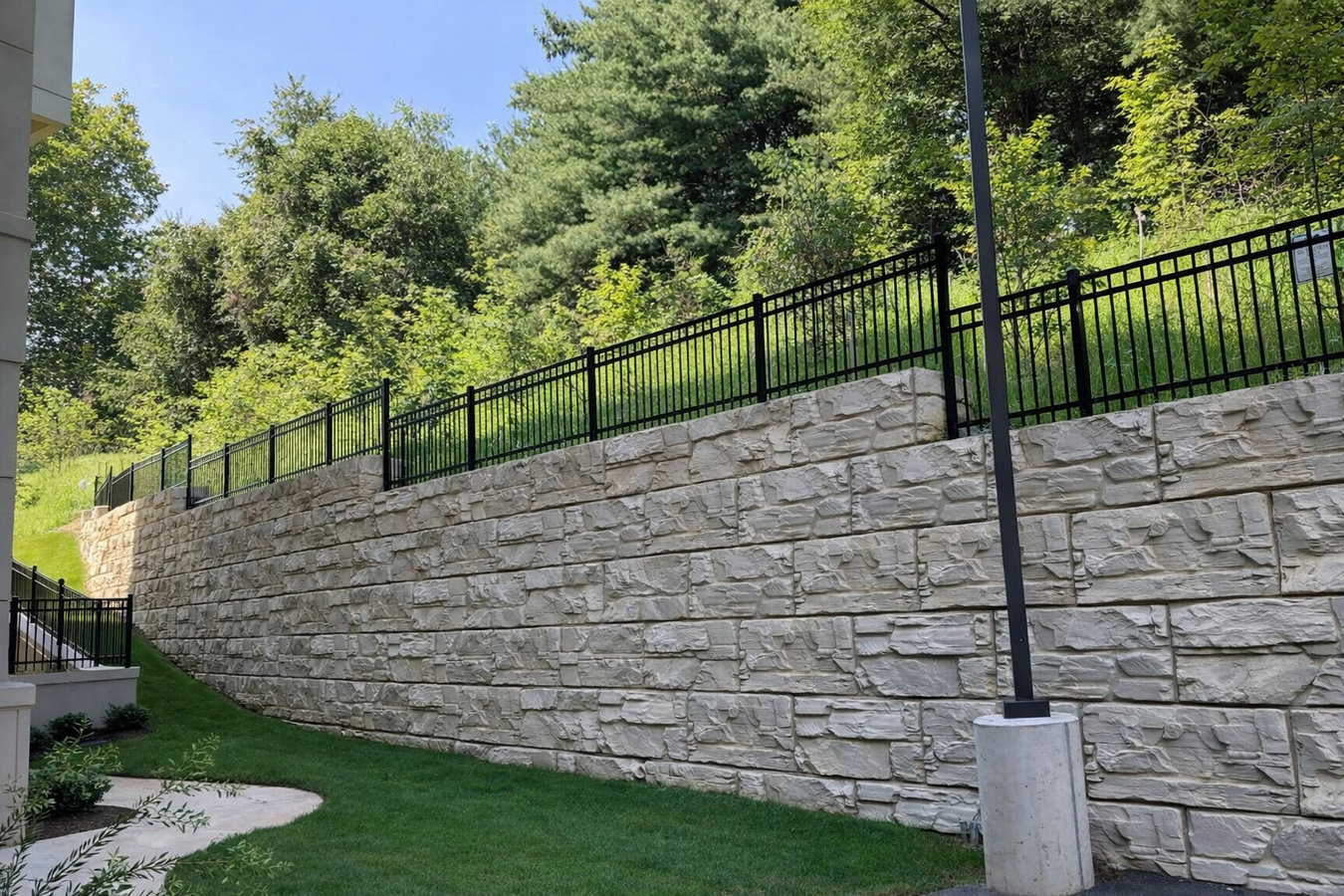
Retaining wall construction in Lynchburg, VA, means building a masonry structure - from concrete block, natural stone, or similar materials - that holds back soil on a slope, most residential walls take two to four days of active construction after excavation, and the base preparation and drainage system underneath determine whether the wall stays level for decades or starts shifting within a few years.
Lynchburg is the "Hill City" for a reason - the terrain rises and falls sharply throughout the city, and sloped lots are common from Rivermont to Boonsboro to College Hill. That topography means retaining walls are not a luxury here; they are often a practical necessity for anyone who wants usable yard space, a stable driveway edge, or a foundation that stays dry. Many homeowners pair retaining wall work with masonry restoration when an existing wall has aged past the point of repair.
The question we hear most often is whether a wall will actually hold up through Lynchburg winters. The answer depends almost entirely on the base depth and drainage - and we will walk you through both before any work begins.
After a heavy rain, if you notice soil, mulch, or gravel collecting at the bottom of a slope in your yard, your hillside is actively eroding. Lynchburg receives about 40 inches of rain per year, and sloped yards without proper support lose a little more ground with every significant storm. Left alone, this erosion can undermine garden beds, damage a driveway edge, or eventually threaten a fence or structure.
If you have an older retaining wall and you can see it tilting forward, developing cracks along the face, or pushing outward in the middle, those are signs the wall is under stress it can no longer handle. This is especially common in Lynchburg's older neighborhoods where walls built decades ago are now dealing with decades of freeze-thaw pressure and drainage buildup. A leaning wall will not fix itself.
If a steep slope in your yard is essentially unusable - too steep to mow safely, too unstable for a garden, or just wasted space - a retaining wall can transform it into a flat, functional area. Many Lynchburg homeowners on hillside lots have added usable outdoor living space or level lawn areas by having a wall built where a slope used to be.
If you notice water collecting against your home's foundation after rain, a slope somewhere on your property may be directing water toward the house rather than away from it. In Lynchburg's clay-heavy soil, that water has nowhere to drain quickly. A retaining wall combined with proper grading can redirect that flow and protect your foundation from long-term water damage.
We build retaining walls from concrete block, natural stone, and tiered systems across Lynchburg and the surrounding area. Every project includes a thorough site assessment - we look at the slope angle, soil conditions, drainage, and proximity to any structures before we recommend a wall type or height. For homeowners with an older wall that is showing its age, we also offer full removal and rebuild so the new wall starts on a properly prepared base.
Walls over four feet tall require a building permit in Lynchburg, and we handle that process with the City of Lynchburg Building and Development Services on your behalf. We also coordinate wall construction with concrete block wall projects when a homeowner needs both structural support and a defined boundary on the same hillside lot.
A cost-effective and durable option for most residential retaining applications in Lynchburg.
Fieldstone and cut stone options that complement older homes and historic neighborhoods.
Two or three shorter walls stacked in tiers - the safer and often less expensive solution for steeper slopes.
Full removal and rebuild for older railroad-tie or dry-stacked walls that have reached the end of their lifespan.
Lynchburg's hilly terrain creates widespread need for retaining walls - especially in older neighborhoods like Rivermont, Boonsboro, and Wyndhurst, which are built on slopes and rolling terrain. That topography means retaining walls are often a practical necessity for usable yard space, stable driveways, and preventing soil from washing downhill. Lynchburg also gets about 40 inches of rain per year, and on a sloped lot, that water has to go somewhere - if it is going toward your foundation, a wall and drainage system can redirect it.
The Piedmont region around Lynchburg is known for dense clay-heavy soils that do not drain well. When rain soaks into clay, it expands and holds water for a long time - which puts significant pressure on any wall behind it. A contractor who understands local soil conditions will use more gravel backfill and a more robust drainage system than might be needed in sandier regions. This is exactly why local experience matters. Homeowners in Bedford, VA and Amherst, VA face similar soil and slope challenges throughout the region. The USDA Natural Resources Conservation Service documents the soil erosion concerns that make proper drainage design critical in this part of Virginia.
We ask a few basic questions - how long and tall the wall needs to be, what the slope looks like, and whether there is an existing wall. Most Lynchburg contractors can schedule an initial visit within a week or two.
We come to your property, check soil conditions, assess drainage, and measure the area. You receive a written estimate that breaks down labor, materials, and drainage work separately so you can compare bids fairly.
If your wall is four feet or taller, we handle the City of Lynchburg permit application. Permit review typically adds one to three weeks before work can begin - we communicate this upfront so there are no surprises.
We excavate, compact the base, install drainage, and build the wall course by course. Before we leave, we walk you through the finished work and show you the drainage outlets so you know what to look for after heavy rain.
We reply to all inquiries within one business day. Spring is the busiest season for masonry work in Lynchburg - reaching out early gives you the best chance of getting your preferred start date.
Written estimate. Drainage explained. Permits handled. No pressure to move forward.
(434) 215-1411In Lynchburg's clay-heavy soil, water management behind a wall is not optional. Every wall we build includes gravel backfill and a drainage system so water escapes rather than building pressure. That is what keeps walls level for decades.
With 15 to 20 frost events per Lynchburg winter, a shallow base means a shifting wall within a few years. We set base depth based on the frost line and soil conditions on your specific property - not a one-size number.
We have built walls on sloped lots across Rivermont, Boonsboro, College Hill, and Wyndhurst - neighborhoods where the terrain and older housing stock require careful site assessment before any work begins.
We handle the City of Lynchburg Building and Development Services permit process for qualifying walls. You do not have to navigate the paperwork yourself, and you get inspected documentation that protects your property value.
Retaining walls that fail in Lynchburg almost always fail for the same reason: inadequate drainage or a base that was not deep enough for local soil and frost conditions. We build specifically for this area, and we explain our approach in plain language before any work begins.
For permit requirements, contact the City of Lynchburg Building and Development Services directly. Virginia contractor license status can be verified through the Virginia Department of Professional and Occupational Regulation.
Restore aging block or stone walls and repair mortar joints before small problems become structural ones.
Learn MoreConcrete block wall construction for property boundaries, garden beds, and structural applications across Lynchburg.
Learn MoreSpring slots fill fast in Lynchburg - reach out now to lock in your start date before the busy season begins.