Loading...
Serving Lynchburg, VA and surrounding areas. (434) 215-1411
Lynchburg Concrete & Masonry is a masonry contractor serving Lexington, VA with stone veneer installation, chimney repair, and historic brick repointing. We have served the Shenandoah Valley since 2015 and reply to every estimate request within one business day.
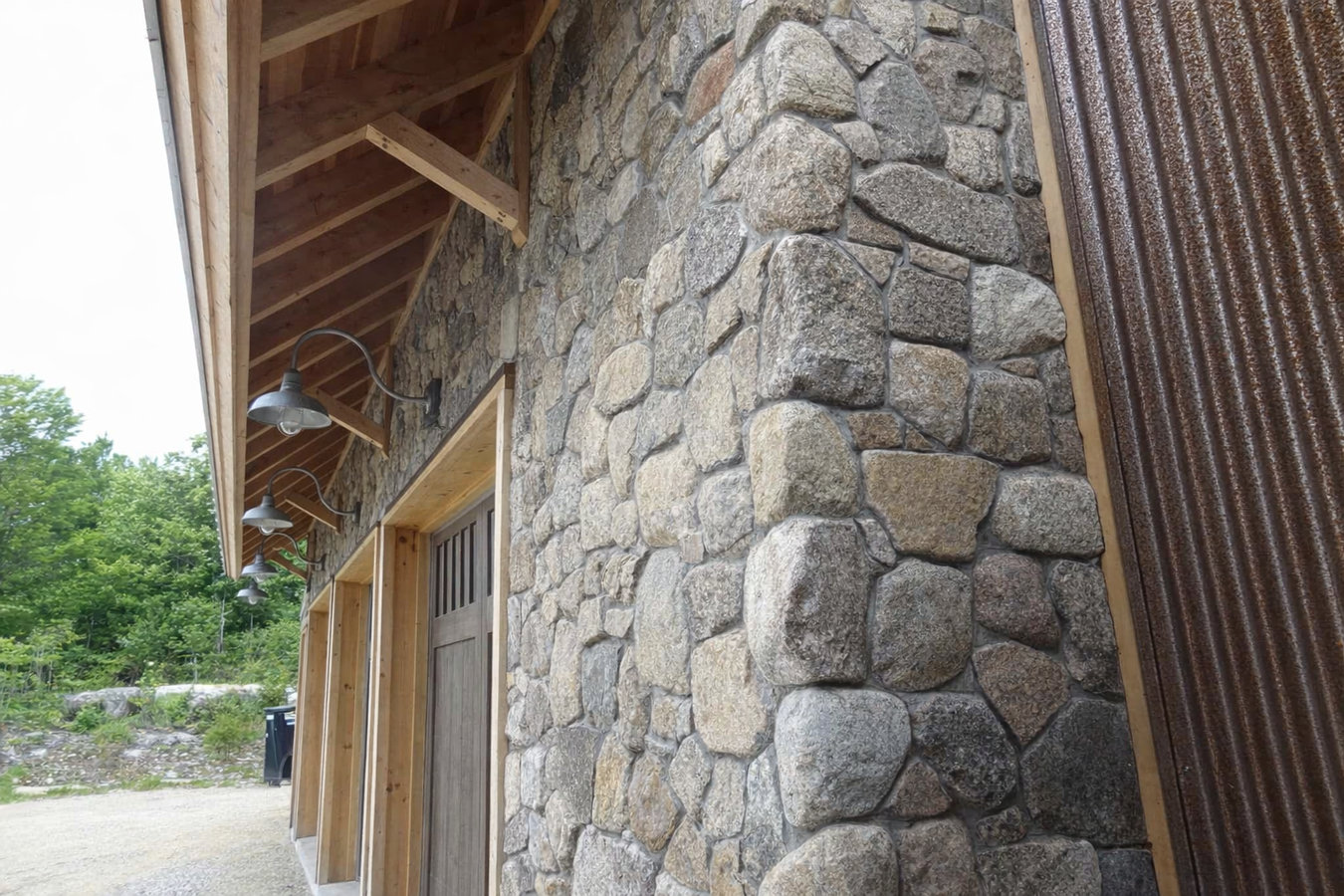
Lexington homeowners use stone veneer to restore the appearance of deteriorating foundation faces, update older brick exteriors, and add a natural stone look that fits the historic character of the Shenandoah Valley without the cost of full stone construction. Proper substrate preparation and mortar selection are critical here because the Valley freeze-thaw cycle will quickly separate veneer that was not installed for cold weather movement. Our stone veneer installation work is built for Lexington conditions so the finish stays bonded and looks right for years.
Many homes in Lexington were built before 1930, and the original brick chimneys on those houses have been through nearly a century of Shenandoah Valley winters. Crumbling mortar crowns, open flashing at the roof line, and joints that have receded past the brick face are the most common failure points. Left unaddressed, those openings let water into the masonry, into the attic framing, and eventually into interior ceilings and walls below.
Lexington's downtown historic district is on the National Register of Historic Places, and many homeowners near that core have properties with original masonry that requires sympathetic restoration - not just repointing with modern portland cement, which is harder than original brick and can crack it from the inside. We use lime-based mortars calibrated to original material hardness, the approach that the National Park Service Preservation Briefs recommend for pre-1920 brick buildings.
Many Lexington homes sit on sloped lots between the Blue Ridge and Allegheny Mountains, and that hillside terrain pushes rainwater toward foundations rather than away from them. Pre-1950 foundations in Lexington were built without the waterproofing membranes and drainage tile systems that modern construction uses, so crawl space moisture, bowing block walls, and horizontal cracks are more common here than in newer construction areas.
Older brick homes near Washington and Lee University and the VMI campus show spalling - the face of the brick breaking off in flakes or chunks - when water enters through open mortar joints, freezes, and fractures the brick face. Identifying and replacing damaged individual units before the affected section grows is significantly less costly than rebuilding full courses, and getting the replacement brick to match the original in color, texture, and hardness matters both for appearance and for long-term performance.
Lexington sits in a valley between two mountain ranges, and residential lots with noticeable slope changes are common throughout the city. Older masonry retaining walls on those lots - dry-stacked stone or unreinforced block - often lean or crack after decades of pressure from saturated soil during heavy rain. A new properly reinforced and drained wall stops that movement and protects the yard, driveway, or structure above it.
Lexington is a small city of roughly 7,000 people tucked into the upper Shenandoah Valley between the Blue Ridge and Allegheny Mountains. It is home to Washington and Lee University and Virginia Military Institute (VMI), and a significant share of its housing stock was built before 1940 - with many in-town homes dating to the late 1800s. Brick construction dominates the older neighborhoods near both campuses and downtown. These are not just old homes - they are homes with original brick, original lime mortar, and original stone foundations that were built before modern waterproofing and before the Virginia freeze-thaw cycle had been taken seriously as a design factor. Properties in or near the historic district also face an additional layer of requirements: the local Historic Architectural Review Board reviews exterior changes, which affects what materials and methods are acceptable for repair work.
The climate in the upper Shenandoah Valley compounds the challenge. Lexington receives about 40 inches of rain annually, and the hillside terrain funnels runoff toward foundations rather than away from them. Winters bring regular freeze-thaw cycles from November through March, with temperatures swinging above and below 32 degrees Fahrenheit multiple times per week. That repeated cycle is the primary cause of mortar joint failure, spalling brick faces, and cracked flatwork throughout Lexington. Homes that have absorbed 80 or 100 years of that cycle are showing those effects now - and addressing them before the next winter is consistently less expensive than addressing them after one.
Our crew works throughout the Lexington and Rockbridge County area regularly, and we understand the local conditions that affect masonry work here. Building permits for structural masonry in Lexington run through the City of Lexington, while properties in Rockbridge County outside city limits go through the county. Homeowners in the historic district have an additional step: the Lexington Historic Architectural Review Board reviews exterior changes before permits are issued. We handle both permit applications and historic review submissions on qualifying projects.
The city sits along US-11 (North Lee Highway) and US-60, with Routes 251 and 39 providing access into the surrounding Rockbridge County communities. Washington and Lee University and VMI are both walking distance from downtown, and most of the older residential neighborhoods - the ones with the original brick homes that need masonry attention - are within a few blocks of those campuses. Natural Bridge State Park is a few miles south along US-11. We service all of it, from the older in-town streets to the rural properties on the outskirts.
We work regularly in Buena Vista, which sits just east of Lexington along the Maury River, and in Amherst to the south. If you are between any of these areas and wondering whether we cover your address, call us - the answer is almost certainly yes.
Reach us by phone or through the contact form on this site. We reply to every Lexington area request within one business day - typically sooner. You do not need to have a full scope of work ready; a description of what you are seeing is enough to get started.
We come to your Lexington property, assess the masonry in person, and give you a written estimate before any work begins. If your project involves a historic district review or a building permit, we identify that during the assessment and include it in the project scope - so there are no surprise requirements later and no guesswork on cost.
We schedule the work around your availability and handle permit applications where required. For most residential masonry projects in Lexington - chimney repairs, repointing, stone veneer installs, retaining walls - the active work portion takes one to four days depending on scope. We clean up the work site at the end of each day.
When the work is complete, we walk through the finished project with you and explain what was done and why. For projects that required a permit, we coordinate the final inspection with the City of Lexington building department. If anything does not meet your expectations, we address it before we close the job.
We serve Lexington and all of Rockbridge County. Free written estimates, no pressure, and a reply within one business day.
(434) 215-1411Lexington is an independent city in the upper Shenandoah Valley, bordered by Rockbridge County on all sides. It is best known as the home of Washington and Lee University - founded in 1749 and one of the oldest universities in the country - and the Virginia Military Institute, a state-supported military college founded in 1839 whose Gothic Revival buildings are among the most photographed landmarks in western Virginia. Downtown Lexington is listed on the National Register of Historic Places, and the streets around both institutions are lined with brick and frame homes from the late 19th and early 20th centuries. The building stock reflects the town's age: substantial in character, maintained by generations of owners, and increasingly in need of the kind of skilled masonry care that modern contractors do not always provide.
Residential Lexington is compact - the city covers only about 11 square miles - and most neighborhoods are within easy walking distance of downtown. The older in-town streets are predominantly brick homes on modest lots with mature trees. The edges of the city grade into Rockbridge County, where newer construction and rural properties begin. Natural Bridge State Park, about 15 miles south on US-11, draws visitors to the area throughout the year. We cover the full city and the surrounding county, and we also work regularly in neighboring Buena Vista and south into Amherst County.
Control erosion and beautify your property with retaining walls.
Learn MoreCreate a solid foundation with precision block wall installation.
Learn MoreDefine your property with expertly crafted brick wall installations.
Learn MoreCall us today or submit an estimate request - we serve all of Lexington and Rockbridge County and respond within one business day.